
Perspective: NYU’s Class Of 2026 Steps Into An Uncertain Future
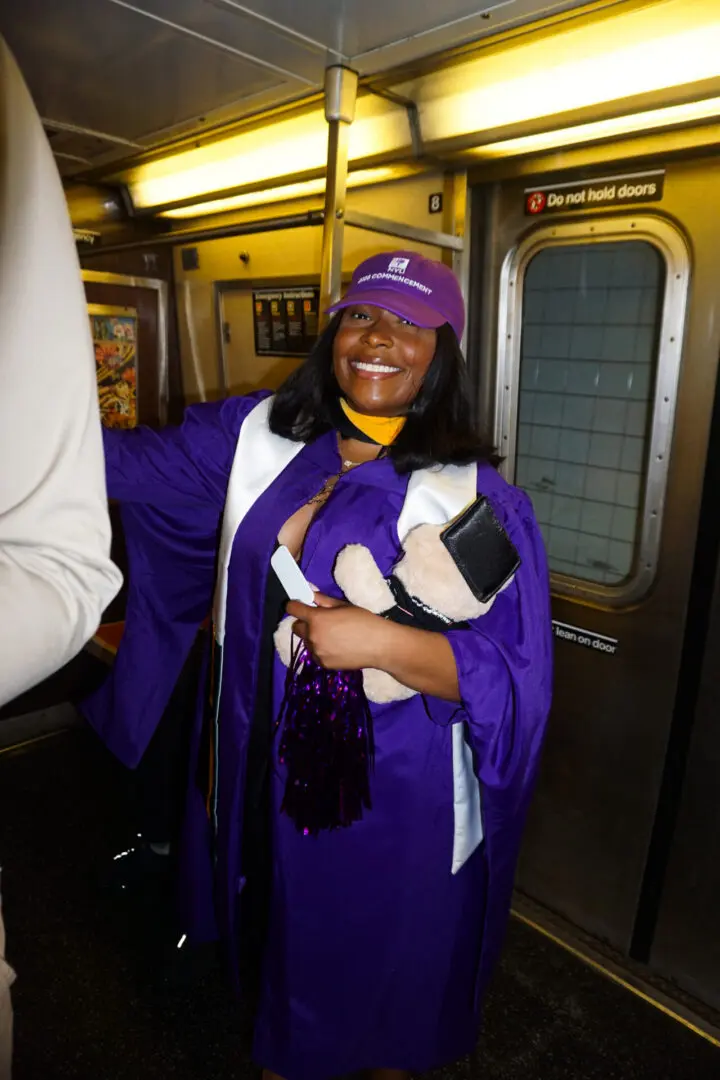
Hours before NYU’s 2026 Commencement began, B.S. candidate Netania Mundell adjusted her purple stole while weaving through crowds of graduates and families packed around lower Manhattan. The energy surrounding New York University’s graduation ceremony was celebratory, but beneath the smiles and photo opportunities, many students carried a sense of uncertainty about what comes next.
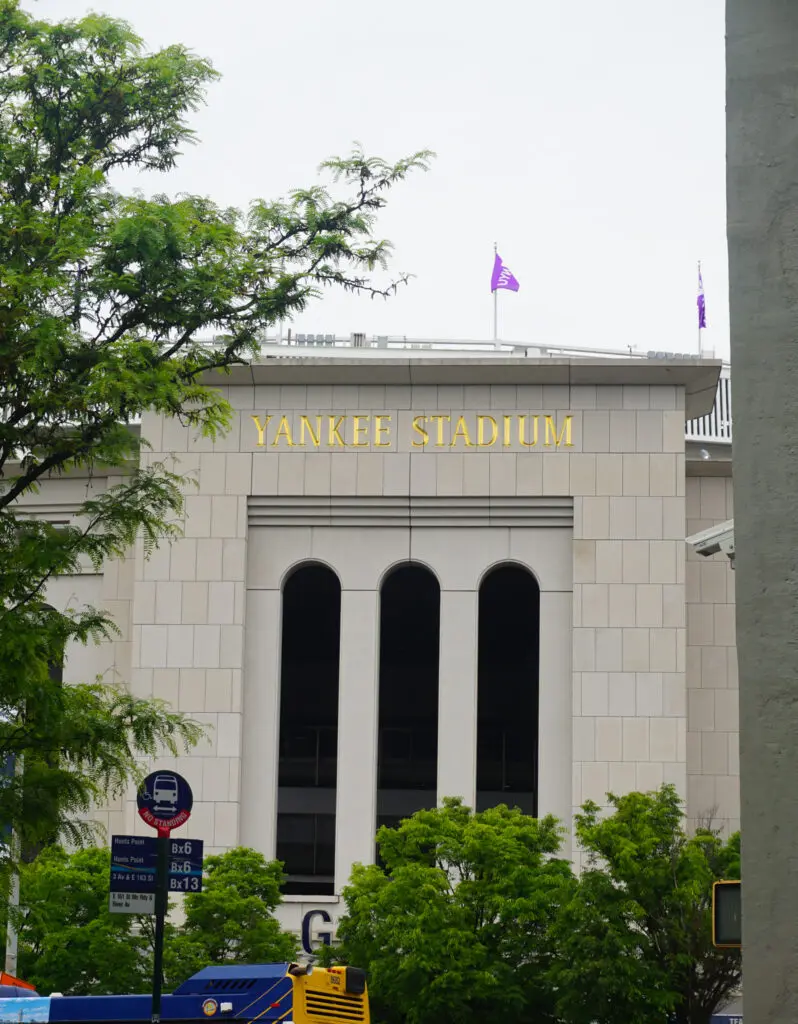
Students filled the streets surrounding the ceremony venue, balancing bouquets, cameras and the weight of years spent navigating one of the most unpredictable periods in recent memory. For many graduates, the transition into adulthood is arriving at a moment defined by rising living costs, a difficult job market and growing anxiety about the role technology plays in everyday life.
“My family was excited to see me graduate,” Mundell said. “Happy they were able to be there to celebrate this moment with me seeing as though I’m the first person to have a master’s degree in my family.”
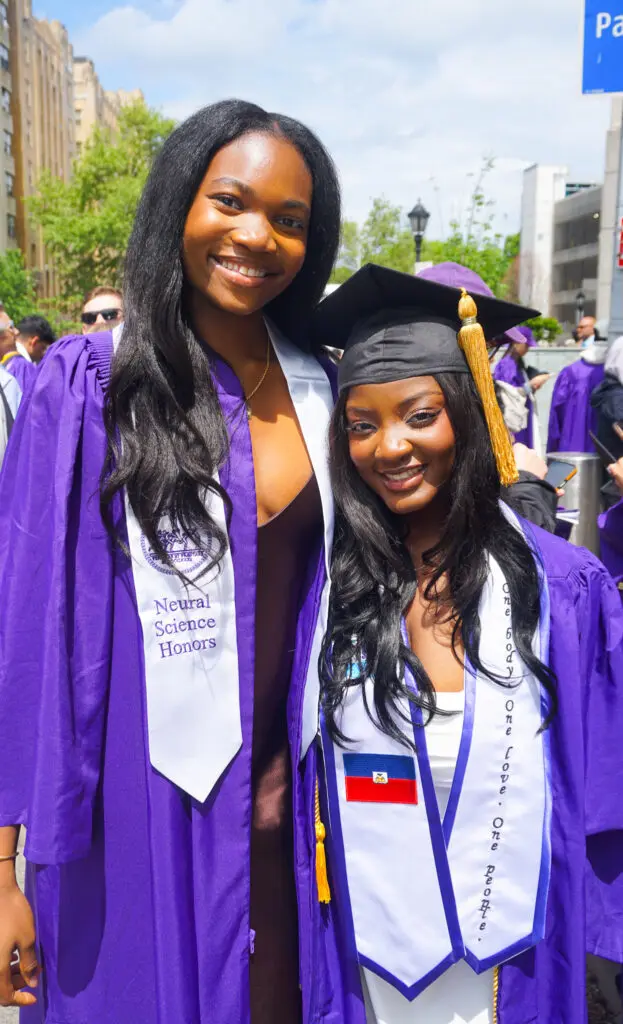
The Class of 2026 entered college during a period of rapid social and technological change. Artificial intelligence has transformed industries at a pace few expected, leaving students wondering what careers will look like in five years — or whether some positions will exist at all. Others are grappling with student debt and concerns about affording life in cities like New York after graduation.
Still, graduates attempted to remain hopeful as music echoed through the streets and classmates embraced one another for photos. Many spoke about the resilience it took to reach this moment, especially after years shaped by political division, economic instability and the lingering cultural impact of the pandemic.
This tension between optimism and uncertainty was reflected during the university’s commencement speeches. Social psychologist and author Jonathan Haidt delivered remarks that resonated with students concerned about the future of technology and social connection.
During his speech, Haidt criticized major tech companies, particularly Meta — for creating platforms designed to monopolize people’s attention and reshape how younger generations interact with one another. He warned graduates about the growing influence of social media algorithms and encouraged students to reclaim their time, relationships and sense of purpose away from constant digital stimulation.
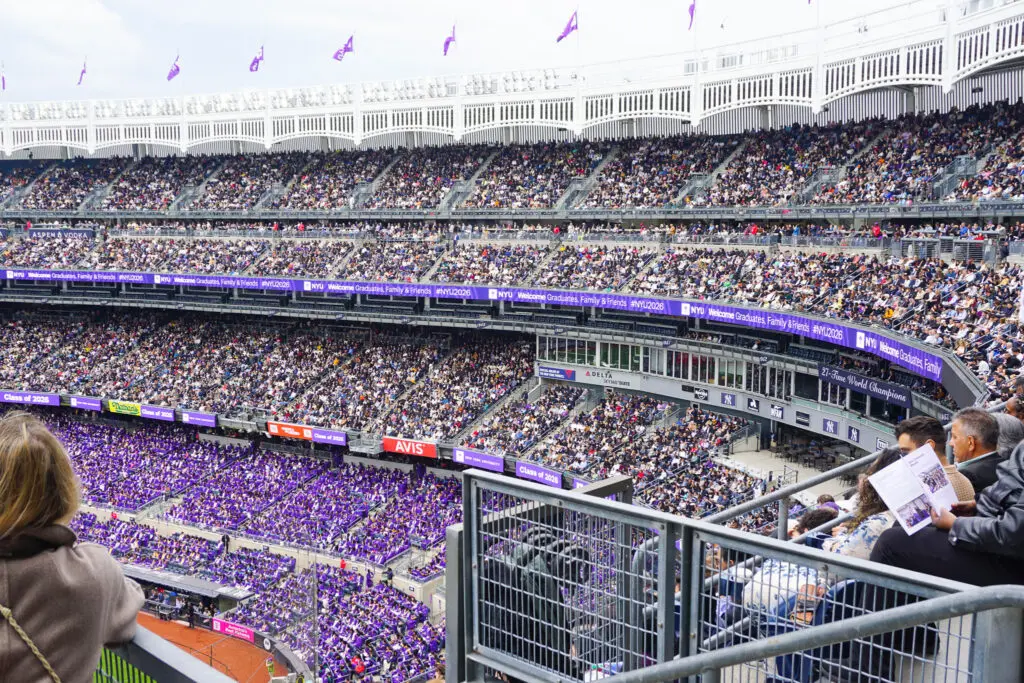
Haidt’s comments drew applause from sections of the audience, particularly younger attendees who have grown increasingly vocal about burnout, doomscrolling and the pressures of maintaining an online presence.
“Graduating in 2026 means a lot in a time where education is being belittled and there is a rise in anti-intellectualism,” Mundell said. “It’s good to show people that going to school is still important and you should still aim to be as educated as possible, become an expert and continue to grow.”
For graduates like Mundell, commencement represented more than the end of college. It symbolized stepping into an unstable world while still trying to maintain hope for personal success and community.
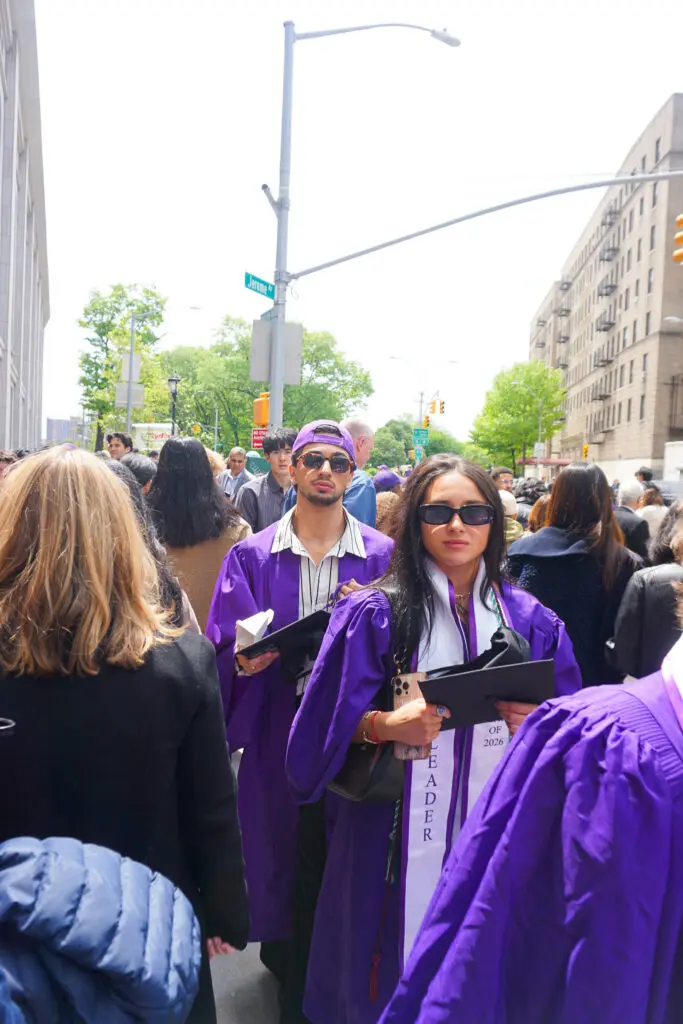
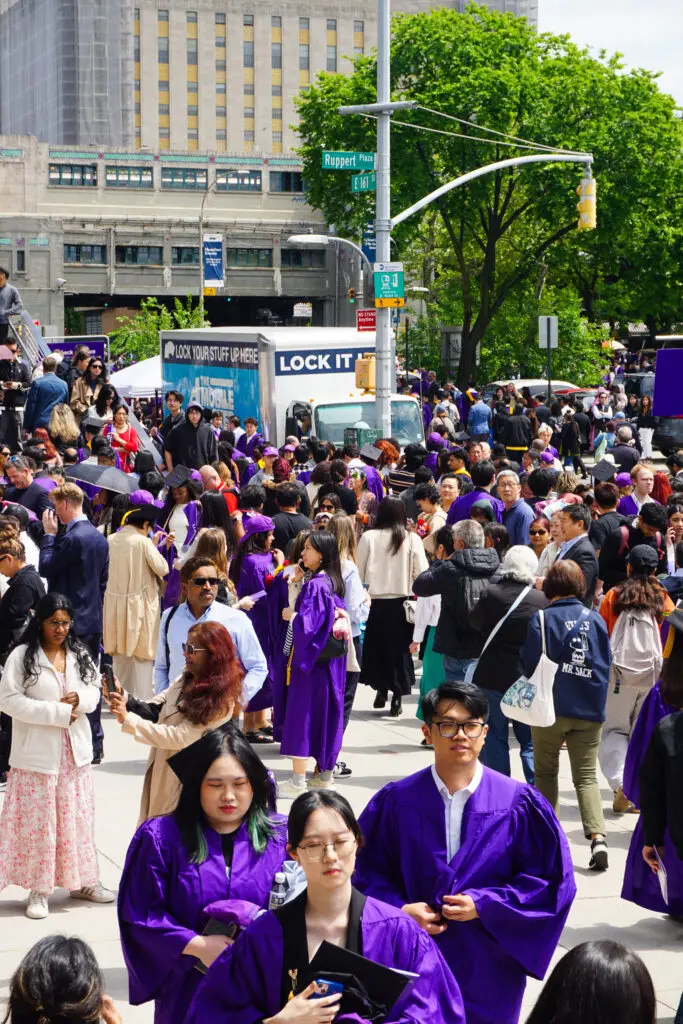
Outside the ceremony, families hugged tightly while graduates searched for friends in the sea of violet caps and gowns. Some prepared to enter corporate jobs, while others planned to pursue graduate school, creative careers or entrepreneurial ventures. A number of students admitted they were still unsure of their next move.
Despite the uncertainty hanging over the future, graduates continued celebrating throughout the afternoon, taking pictures near Washington Square Park and reflecting on the experiences that brought them to this moment.
As NYU’s Class of 2026 closed one chapter and prepared to begin another, the mood surrounding commencement felt reflective as much as celebratory. The future may feel unstable, but for many graduates, simply reaching this milestone was proof that they were ready to face whatever comes next.